

My teaching philosophy
As a teacher-researcher of professional and technical writing, I aim to foster writerly agency, real-world problem solving, and ethical rhetorical decision making through a liberatory pedagogical framework. Central to these aims is the belief that students do not learn in a vacuum; the knowledge they attain as writers is inseparable from their roles as students and people. My ultimate goal as an educator is for students to become more effective and ethical communicators in their intended disciplines and beyond.
Writerly Agency via Rhetorical Listening, Iterative design, and Active Learning
My Master’s thesis on liberatory pedagogy naturally fueled my commitment to challenging the teacher-to-student power dynamic. This commitment is guided by my belief that effective teachers continually seek student feedback and acknowledge that the needs of each section and individual student differ. As such, I aim to approach the classroom as a learning coach who meets students where they are through rhetorical listening. This approach begins on the first day, when students complete an introductory survey about their current writing strengths, learning goals, and a previous course that promoted their success. I then use these responses to learn more about my students and tailor our learning environment for the first portion of the semester. Drawing on iterative design values, I regularly incorporate student feedback into my course design by assigning anonymous “Start, Stop, Continue” instructor surveys after each unit. These surveys prompt students to share what is currently working well in our course and what can be tailored to better foster their success. When students realize that I want them to have an active say in our course format and design, they often more readily take ownership of their learning and see the value of rhetorical listening and iterative design principles.
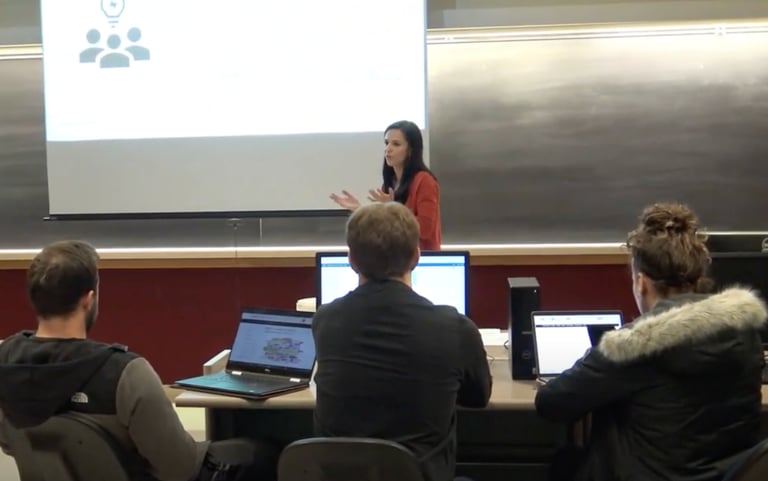
Likewise, I believe that a range of learning modalities is necessary to foster an empowering, inclusive classroom. Across my composition and technical writing courses, students engage in various hands-on learning activities such as content and design critiques, genre analyses, rubric feedback sessions, peer response workshops, APA review games, and project Q&A sessions. Each week also includes think-pair-share discussions, writing exercises, collaborative work, and post-class exit tickets. The lectures I present are often interactive; students are prompted to share relevant experiences from internships, clinical shadowing, and research projects and are often asked to apply lecture content in group work activities. This attention to active learning extends to my course curriculum, where students engage with various scaffolding activities to build their writing process and confidence throughout the term. Each course unit includes a series of smaller, low-stakes assignments that build to our final project, such as topic ideation activities, project proposals, source matrix charts, design plans, and rough drafts. One previous student described this attention to scaffolding: “Each scaffolding assignment was really helpful. I felt like getting to the final product was a lot easier when we were able to turn in a draft of each step, get feedback, and then improve before getting to the next step of the assignment. It made each project less overwhelming.”
My commitment to active learning extends beyond the traditional classroom through institutional workshops and field trips. My composition, healthcare, and science communication students regularly work with research librarians; in my healthcare writing classes, for example, a health sciences librarian leads a PubMed literature search workshop and later returns to offer one-on-one search strategy support. At Purdue, my first-year Summer Start students attended database and archival library workshops, and embedded writing lab tutors visited weekly to offer one-on-one consultations. In my first-year writing seminar, “Public Health in the City,” students visit the Dittrick Medical History Museum to explore the history of health technologies and think more deeply about multimodal design.
Rhetorical Awareness vis Real-World Problem Solving
By engaging with real-world problems, students enhance their rhetorical awareness and ability to effectively communicate across diverse contexts. In my professional and technical writing courses, students engage in hands-on professionalization by applying rhetorical conventions in their discourse communities and working collaboratively to respond to multiple audiences. My STEM students in science communication, for example, develop a science explainer for a popular audience on a complex topic related to their coursework or laboratory research. They then interview an expert in their discipline about their research, day-to-day communication tasks, and the importance of clearly communicating their research to the public. These projects require students to directly grapple with the complexity of plain language and audience awareness in science writing. At Purdue University, my ENGL 422: Writing for the Health & Human Sciences students have worked in teams to develop grant proposals for local medical needs, such as a mobile children’s health clinic in rural Benton, Indiana, or a “Cancer Buddies” program to support the mental health of those diagnosed in their community. Many students engaged with the genre of grant writing for the first time and saw the practical benefits of conducting actionable collaborative research. Similarly, at Case Western Reserve University, pre-medicine students learn how to develop replicable literature searches, appraise scientific studies, and develop a literature review that informs evidence-based practice.
Outside of the classroom, my business writing students have worked directly with local nonprofit partners to identify their communication challenges and produce a series of rhetorically sound campaign deliverables specific to their designated community partner. These deliverables included website redesigns, fundraiser fliers, and social media templates that raised awareness for nonprofits within our campus community. Students in my technical writing courses actively apply iterative design principles in teams and conduct usability testing with intended users outside of our section. Part of this unit involves completing the CITI Human Subjects Research Training to conduct testing with intended users outside of our course community. This attention to real-world problem solving and collaboration prepares students for the workplace and strengthens their ability to write for real-world audiences and genres in their communities. One of my previous students affirms, “All of the assignments were very applicable. There was no unnecessary busy work. I understood why each project was assigned and how it could contribute to my development as a future member of healthcare.”
Human-Centered Design via Critical Inquiry and Reflection
As a technical and professional communicator, I prompt students to reflect on their rhetorical situation while also considering the power of communication in their communities and intended fields. For example, in “Public Health in the City,” students learn how public health is shaped not only by data and policy but also by human stories and discourse. Through critical readings, data analysis, and research on Cleveland’s health inequities, students consider what access to care means beyond availability, who has the power to define a health crisis, and how public health storytelling can promote justice. Each section learns to critique written texts and design deliverables through an equitable lens, often asking, “whom do these rhetorical choices include, exclude, or dismiss?” Across my courses, students learn about data storytelling by analyzing visualizations that use the same datasets but tell different stories. While comparing visualizations, they note what variables and stories are neglected and are tasked with developing original, ethically designed visualizations in research posters, white papers, and patient education materials.
In addition to critical reflection and data ethics, TPC students practice applying accessible design and plain language principles. One unit in WRIT 211: Writing for the Health Professions asks students to analyze the content and design of existing patient education materials using clinical tools such as the CDC’s Clear Communication Guide and the Patient Education Materials Assessment Tool (PEMAT). They then produce a culturally sensitive brochure that distills complex medical terminology for a lay audience. This challenge asks them to research both their chosen disease and their patient population’s experiences with the medical system to think more deeply about their rhetorical choices and who they impact. Through these activities, students not only develop essential communication skills but also cultivate a critical awareness of the ethical implications of their work, preparing them to be responsible and informed communicators in their fields.
Holistic Learning via a Culture of Care
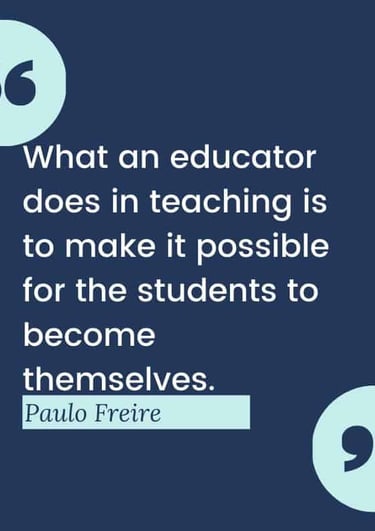
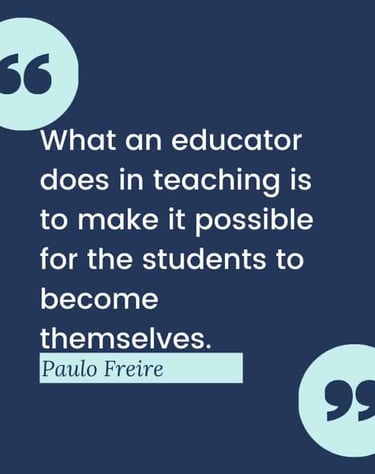
Lastly, my first-generation background fuels my belief that a holistic learning environment is central to intellectual risk-taking and growth—“What the educator does in teaching is to make it possible for the students to become themselves” (Freire, 1968). Part of cultivating this environment involves honoring the whole student and recognizing their humanity—their background, successes, and challenges, both in and outside of the classroom. Each of my assignment sheets includes a list of course outcomes the project fulfills, along with how students will benefit from the project as individuals and professionals. This practice affirms my belief that learning, along with the purposeful application of knowledge, involves the whole person. Beyond course content, I regularly check in with students about their lives outside the classroom through an informal “go-around” question at the start of class. This practice allows me to learn more about my students and build further rapport with them throughout the term. Additionally, I facilitate brief mindfulness writing prompts during midterms and finals week so students can check in with themselves, connect with the writing process in a new way, and become more grounded in their schoolwork and lives. As one previous student remarked, “This course was unlike anyone I have taken at Purdue because the instructor actually cared about me, my grades, and my mental well-being.” Such a pedagogical posture is essential to helping each section bring their full selves to the classroom and apply what they have learned to their communities as professionals and people.
As a mentor, I focus on cultivating a brave space where students of all backgrounds feel encouraged to ask questions and openly share their academic and personal interests. Ultimately, my teaching philosophy is dedicated to creating an inclusive and empowering learning environment that promotes writerly agency, critical thinking, and personal growth, enabling students to become effective communicators and active contributors to their communities.


"I feel as though I've gotten a deeper understanding of what is expected in healthcare and what can help me further my career. In this class, the presentations on resumes, CVs, PEMS, and research literature all helped me understand more on a foundational level the importance of each of them in the healthcare field; I think the work we did: resume, letter of intent, personal statement, lit review, and PEM really helped me understand how to communicate about science and myself." —2 health writing students
"Deptula organizes the class content very well and with a lot of intention. The investment she's put into curating each week's content really shows and is really helpful. The readings, links, and resources are relevant and abundant."
—health writing student
"The structure and content are very, very clear and gives you an opportunity to think and learn about the Cleveland community beyond what you'd expect. I feel like my perspective about public health in Cleveland has broadened since taking this class and it has given me ideas on projects to work on in the future; Being able to write and watch videos about public healthcare decades ago and from now, I was really able to learn a lot." —2 "Public Health in the City" students
"Deptula's short videos are clear, concise, and easy to digest. She's immensely helpful in regards to assignment feedback and answering questions. Her course is laid out really well." —technical writing student
"Professor Deptula always had an organized plan of class, kept Brightspace very detailed and updated, and was always ready to provide assistance. This class is not required for my major but I still enjoyed this class because of her; The content is clear and concise and is extremely well organized." —business writing student
"The set up of this class with the assignments and lectures allow students to succeed." —first-year writing student
"I think what I liked best about this course is how Dr. Deptula cares about her students a lot. She gives great feedback and prepares each student in an effective way for their healthcare journey. She always encourages questions and ways to tailor her class." —health writing student
"I could tell that Adrianna cared about what we learned in this class and tried to make the material engaging and applicable to everyone's broad range of interests; I really enjoy the professor breaking up class instruction with other activities such as group discussions." —2 health writing students
"My favorite thing about this course was incorporating writing and my major; it got me excited about the prospect of future professional research; The course content and the professor were excellent and class was fun!" —2 "Public Health in the City" students
"[Deptula’s] passion for written communication is clear in the way she uses assignments as learning tools and extensions of skills beyond the classroom." —business writing student
"[Deptula] is amazing at making the course fun and engaging, while simultaneously maintaining an environment that makes it necessary and possible to learn valuable information/skills; Awesome class that always motivated the students to participate and go above and beyond."
—2 business writing students
"[Deptula] has a great welcoming energy and encourages questions and learning; Very good at what she does. Everything was taught with passion."
—2 first-year writing students
What my students say about my course design & preparation:
Student Evaluation Voices
What my students say about my enthusiasm for teaching & active learning:


What my students say about my writing feedback & responsiveness to questions:
"The feedback really helped me a lot. I want to leverage it to further my scientific writing, and for when I apply to med school after my gap years. I have used it recently too, especially for my research lab. The feedback built on itself throughout the semester. I think it really helped me identify what I needed to correct, and how I could tangibly do so." —health writing student
"The instructor's feedback was very helpful. It gave me the opportunity to grow as a writer and as a student, and gave me the chance to better understand my writing weaknesses and strengths, all skills that I will carry on to my future endeavors. Shoutout Dr. D!" —"Public Health in the City" student
"Dr. D's grading feedback is phenomenal. The feedback is accessible in Brightspace and combined with the assignment rubrics creates a better learning experience for each assignment."
—technical writing student
"Deptula is always eager to help students no matter how busy her schedule might be. Even if you won't be able to make office hours, she goes out of her way to find a time window that works the rest of the week. She is also one of the best instructors I have had at Purdue that gives the most valuable feedback. It really shows me that she took the time to carefully read and understand my work. Thus, she is so effective at giving feedback that works." —business writing student
"The professor was very supportive and helpful with the criticism instead of trying to bash the writing, which made me feel more confident about my writing. She made me feel okay about making mistakes and that the only thing that really matters is to keep learning and trying to improve my writing. It was overall a very positive atmosphere, very rare for an asynchronous course." —first-year writing student
What my students say about my inclusive teaching practices:
"Dr. D was amazing! She always had amazing lecture slides that were clear and easy to follow. She was an excellent communicator. She spoke clearly and was very helpful for 1-on-1 questions. She always made the class a welcoming environment." —health writing student
"Dr. Deptula is extremely kind, caring, approachable, and a great instructor. Her communication is extremely clear and I never once found myself confused on what to do. Class time was always used productively." —"Public Health in the City" student
"Dr. D, I appreciate your openness and willingness to care for students. It was clear that you took the time to analyze how you would deliver content that is easy to follow, yet informative. My experience at Purdue hasn't been well in regard to having professors who accommodate various levels of academic understanding, but you are one of the few who did bring support! You made learning enjoyable." —technical writing student
"Professor Deptula was a very accommodating and informative instructor. Her classroom was always inclusive and encouraging and made me want to work on my ENGL 420 assignments. Her commitment to her students' wellbeing is impeccable and I have never had a professor like her."
—business writing student
"[Deptula] shows that she's always willing to help out students which makes it a comfortable environment to ask questions; One of the greatest, kindest and most helpful instructors! Makes the course such a safe space." —2 business writing students
"Deptula was genuinely the best English instructor I have ever had. I've always struggled to understand various things in English but she sat down and spent time helping me understand how to write correctly." —first-year writing student


What my students say about my attention to the whole student:
"Dr. Deptula is an amazing instructor. She empathizes deeply with her students, gives amazing feedback on papers, and does it in a timely manner. She truly cares about her teaching, and it shows with the way she teaches this course. This course has been made enjoyable by the instructor alone for sure." —health writing student
"I truly loved this course solely because of the person she was teaching it and leading it. This course was unlike anyone I have taken at Purdue, because the instructor actually cared about me, my grades, and my mental well-being. She checked in on us in every class, answered all questions, was very constructive and helpful in her grading, and overall was just awesome."
—health writing student
"I am very lucky and grateful to have had Professor Deptula as a professor. She made her class engaging, and was always there when we needed help. She is also very understanding and uplifting, and cares about everyone; [Deptula] is the perfect example of what incoming freshman need from a professor." —2 "Public Health in the City" students
"Deptula knows how to run a course and make sure her students can succeed. An amazing professor who cares about her class." —technical writing student
"Professor Deptula is very attentive and thorough while teaching, and connects with the students on more than just the surface level. She is a talented instructor; This instructor is so great at looking at the greater good for her students." —2 business writing students
"Deptula is one of the most caring instructors I have ever had. She genuinely wants everyone to succeed and does everything in her power to help students both inside and outside of the classroom." —first-year writing student


"Deptula is a dynamic instructor who has an outstanding rapport with her students. I was impressed by how she included multiple active learning strategies in the classroom and was able to scaffold different kinds of activities toward one goal. Deptula’s classroom persona makes it easy for students to connect with her because she values their contributions and ideas. As a result of that respect, students readily engage with her questions, prompts, and guidance."
- Dr. Jennifer Bay, Professor of English, Purdue University